Overview and Definition
Definition of an HBCU
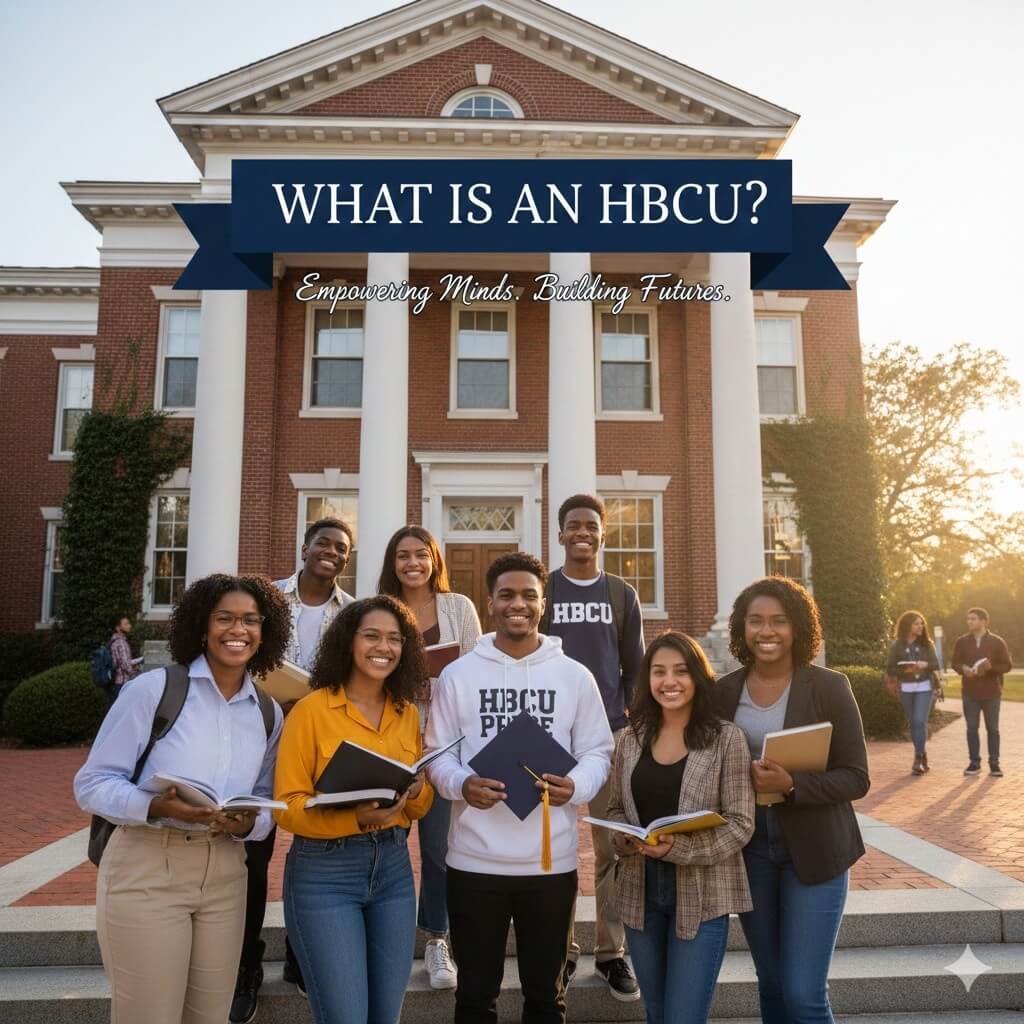
An HBCU — Historically Black College or University — is a U.S. institution of higher education established before 1964 with the principal mission of educating Black Americans. This definition was formally codified in the Higher Education Act of 1965 (Title III), which recognized HBCUs as accredited institutions founded prior to 1964 whose primary educational purpose centered on serving African American students.
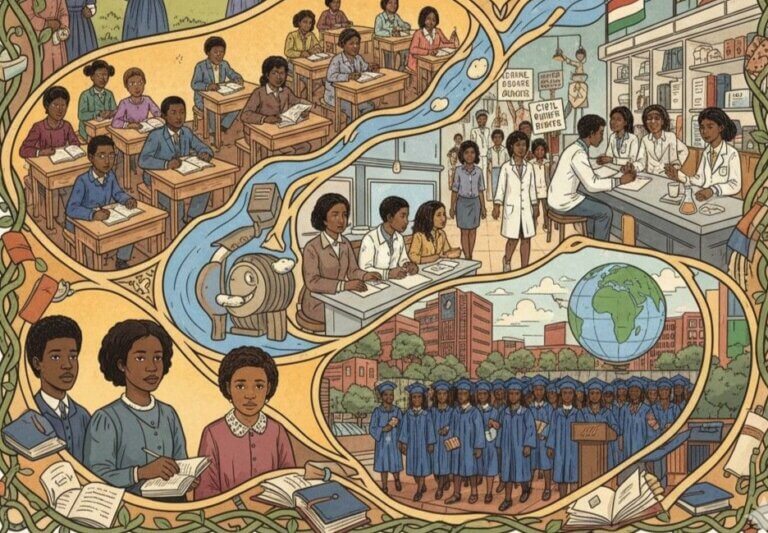
Although the legal definition came later, HBCUs had already been operating for more than a century. These institutions emerged during a period when systemic racism and segregation denied Black Americans access to mainstream colleges and universities. Their founding purpose was not only academic instruction but also vocational training, leadership development, and community uplift for a population excluded from educational opportunity.
Today, the term “HBCU” refers to more than 100 accredited institutions across the United States that continue to honor this historic mission while serving increasingly diverse student bodies.
Scope of HBCUs today
HBCUs today make up a network of more than 100 accredited institutions across the United States, primarily concentrated in 19 Southern and border states. These institutions include a mix of public universities, private colleges, liberal arts schools, research institutions, and land‑grant universities created under the Second Morrill Act of 1890.
This landscape reflects both historical patterns and modern educational needs. Many of the largest and most influential HBCUs—such as North Carolina A&T State University, Howard University, Prairie View A&M, and Spelman College—continue to grow in enrollment and national visibility. As of 2022, HBCUs collectively enrolled approximately 343,700 students, a number that has risen in recent years due to renewed interest, cultural relevance, and increased recognition of their academic strengths.
Despite representing only about 3% of U.S. colleges, HBCUs play an outsized role in producing Black graduates in STEM, leadership, public service, and professional fields. Their geographic distribution and institutional diversity make them a vital part of the American higher education system today.
Who They Serve
HBCUs were originally founded to educate Black Americans who were legally and socially excluded from white institutions, but they have always been open to students of all races. Title VI protections and the Higher Education Act formalized this openness, ensuring that HBCUs cannot restrict admission based on race.
Today, HBCUs serve a diverse and evolving student population. While Black students remain the majority—about 70% of total enrollment—HBCUs now enroll 20–25% non‑Black students, including white, Latino, Asian, and multiracial students. Some institutions, such as Bluefield State College, have majority‑white student bodies, while others maintain predominantly Black enrollment aligned with their historic mission.
International enrollment has also grown significantly. Institutions like Tennessee State University, Morgan State University, and Howard University each host hundreds of international students, many pursuing graduate degrees in STEM, law, medicine, and business. This global presence enriches campus culture and reflects HBCUs’ expanding role in international education.
In short, HBCUs serve any student seeking a supportive, culturally grounded, academically rigorous environment, regardless of race or nationality.
History and Mission
Early Origins (Pre–Civil War)
HBCUs began in the North because Southern states legally prohibited educating Black people before the Civil War. The first institution, the Institute for Colored Youth (Cheyney University), was founded in 1837 by Richard Humphreys to provide education and vocational training to free Black Americans. Additional early institutions included Lincoln University (1854) and Wilberforce University (1856), both of which expanded access to liberal arts and professional education for Black students long before desegregation.
Post–Civil War Expansion (Reconstruction Era)
After the Civil War, HBCUs expanded rapidly across the South. Institutions such as Atlanta University (1865) and Shaw University (1865) were founded to educate newly freed African Americans. This growth was supported by the Freedmen’s Bureau and later by the Second Morrill Act of 1890, which required segregated states to establish land‑grant colleges for Black students. Many of today’s public HBCUs were created during this period.
Founding Mission and Educational Purpose
HBCUs were created to provide teacher training, ministerial education, vocational skills, and leadership development for Black Americans who were excluded from white institutions. Their mission extended beyond academics: they were designed to uplift communities, cultivate moral leadership, and create pathways to economic and social mobility. Many were founded by Black and white religious organizations who viewed education as a moral imperative.
Role During Jim Crow and the Civil Rights Movement
During segregation, HBCUs served as sanctuaries of learning and cultural affirmation. They became hubs for political organizing and intellectual development. Leaders such as Dr. Martin Luther King Jr. (Morehouse College) and Ella Baker (Shaw University) developed their activism and leadership on HBCU campuses. These institutions were not just schools — they were engines of social change.
HBCUs Today – Impact and Enrollment
By the Numbers
HBCUs collectively enroll approximately 343,700 students across 100+ accredited institutions, based on 2022 data. These colleges are primarily located in 19 Southern and border states, reflecting the historical geography of segregation and Reconstruction‑era expansion. While Black students make up about 70% of total enrollment, the demographic landscape is shifting as HBCUs attract a broader mix of students.
Enrollment Trends and Growth
After years of stagnation, HBCUs have experienced a 7% enrollment increase between 2020 and 2023, signaling renewed national interest. Many institutions reported record‑breaking freshman classes in 2024–2025. Examples from the research include:
- Alabama A&M University reaching its highest enrollment ever (nearly 7,000 students).
- Edward Waters University achieving its largest enrollment in 20+ years, with a 30% increase since 2019.
- Elizabeth City State University recording its highest enrollment in a decade.
- North Carolina Central University surpassing 9,000 students for the first time.
- Benedict College reporting its strongest new‑student growth since the pandemic.
These surges reflect increased recognition of HBCUs’ value, cultural relevance, and supportive environments.
Largest HBCUs
The largest institutions today include:
- North Carolina A&T State University — 15,275 students (Fall 2025), the first time it surpassed 15,000.
- Howard University — 14,890 students (Fall 2024). Other major institutions include Prairie View A&M University and several large public HBCUs across the South.
Academic and Economic Impact
Although HBCUs represent only 3% of U.S. colleges, they produce 25% of Black STEM graduates, demonstrating an outsized academic contribution. Their economic footprint is equally significant: HBCUs generate $16.5 billion in annual economic activity, support local job creation, and drive upward mobility for low‑income students.
Who Attends HBCUs? Diversity and Global Perspective
Student Demographics
HBCUs remain rooted in their historic mission to serve Black students, but their student bodies have become significantly more diverse over time. While Black students make up roughly 70% of total enrollment, 20–25% of HBCU students today are non‑Black, including white, Latino, Asian, multiracial, and international students. Some institutions—such as Bluefield State College—now enroll majority‑white student populations, while others maintain predominantly Black enrollment aligned with their founding purpose.
International Student Growth
International enrollment has expanded dramatically. Examples from your research include:
- Tennessee State University: international population grew from 77 students (2008) to 549 students (2016).
- Morgan State University and Howard University: each enrolled 900+ international students by 2018.
These students are especially concentrated in graduate programs in STEM, law, medicine, and business. Their presence brings global perspectives and strengthens academic and cultural exchange on HBCU campuses.
Open to All Students
Despite persistent myths, HBCUs have always been open to students of any race, a principle later reinforced by federal civil rights protections. Title VI and the Higher Education Act ensure that HBCUs cannot restrict admission based on race. Today, HBCUs serve students from across the world who seek supportive environments, strong academic programs, and culturally rich campus life.
Cultural Significance and Campus Life
Cultural Community and Tradition
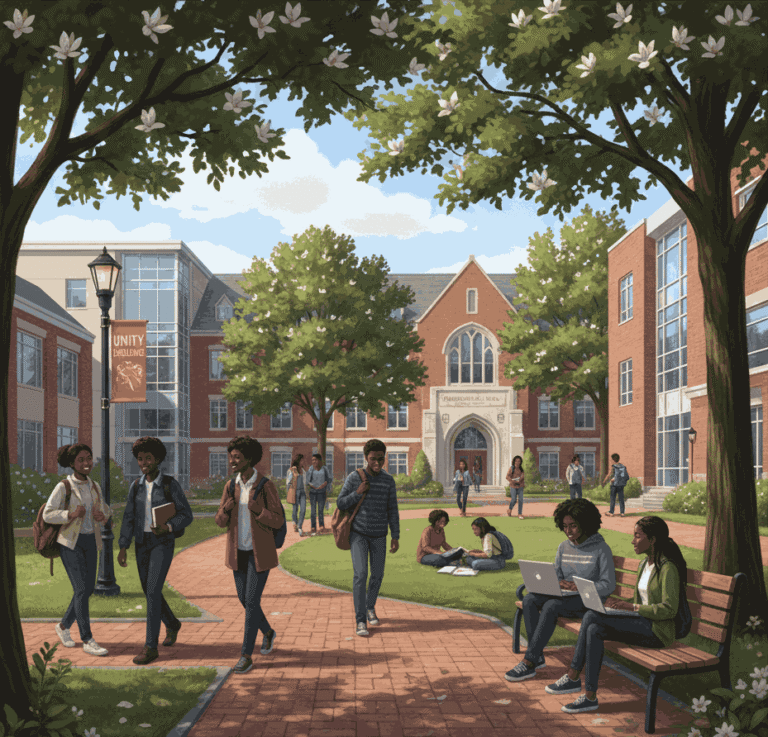
HBCUs are widely recognized for creating environments that affirm Black identity, history, and culture. They preserve African‑American traditions through campus events, artistic performances, and community celebrations. Signature experiences such as Homecoming, step shows, and Greek‑letter organizations are not just social events — they are cultural institutions that connect generations of students and alumni. These traditions reinforce pride, belonging, and continuity across decades of HBCU life.
Mentorship, Support, and Family‑Centered Environments
A defining feature of HBCUs is their emphasis on relationship‑based education. Faculty and staff intentionally invest in students’ academic and personal success, creating a sense of family that larger institutions often struggle to replicate. Your research highlights that:
- HBCUs offer smaller class sizes and closer faculty‑student relationships.
- Mentorship extends beyond academics — dining hall workers, residence life staff, and campus employees all contribute to a supportive environment.
- This model is especially impactful for first‑generation students, adult learners, and student parents, who often find HBCUs more accommodating than other institutions.
Cultural Affirmation and Identity Development
HBCUs center Black identity in ways that predominantly white institutions often do not. Curricula, campus programming, and community life celebrate Black history, Black excellence, and Black contributions across fields. For many students — especially those from under‑resourced K–12 backgrounds — HBCUs provide the first educational environment where their culture is affirmed rather than marginalized. This cultural grounding has measurable academic benefits, particularly in STEM fields where Black students often face isolation elsewhere.
Alumni Voices and Lived Experience
Your research includes powerful alumni reflections that illustrate the emotional and cultural impact of HBCUs:
- Graduates describe HBCUs as places where they learned more about themselves, their history, and their purpose.
- Alumni frequently pursue community‑oriented careers in education, health, and public service, reflecting the institutions’ emphasis on collective uplift.
- Many cite HBCUs as the first place they felt fully seen, supported, and celebrated.
Debunking Common Misconceptions
Myth 1: “HBCUs Are Only for Black Students”
This is the most widespread misconception about HBCUs. While these institutions were founded to educate Black Americans who were excluded from white colleges, they have always been open to students of all races. Today, 20–25% of HBCU students are non‑Black, including white, Latino, Asian, and international students. Some HBCUs actively recruit non‑Black students, especially in graduate programs in STEM, law, and medicine. The diversity within HBCUs reflects their long‑standing commitment to educational access and the belief that higher education benefits from multiple perspectives.
Myth 2: “HBCUs Provide Inferior Education”
Research strongly contradicts this stereotype. A Gallup survey found that 58% of Black HBCU graduates felt their professors cared about them, compared to only 25% of Black graduates from non‑HBCUs. When controlling for student background and institutional characteristics, Black students at HBCUs graduate at rates 10–11 percentage points higher than Black students at predominantly white institutions. Major corporations and graduate programs actively recruit from HBCUs, especially those with strong STEM and professional programs.
Myth 3: “HBCU Graduates Can’t Find Good Jobs”
Employment outcomes for HBCU graduates are consistently strong. A Gallup‑Purdue study found that Black HBCU graduates report higher post‑graduate employment rates than their peers from non‑HBCUs. LinkedIn’s 2025 Top Colleges rankings named Howard University the #1 HBCU for alumni career success, with Morehouse, Spelman, North Carolina A&T, and Hampton also ranking highly. HBCU graduates earn substantial lifetime returns — the UNCF reports that HBCU alumni earn $927,000 more over a lifetime than peers without a degree.
Myth 4: “HBCUs Lack Diversity”
This critique applies a double standard. Predominantly white institutions are rarely criticized for homogeneity, yet HBCUs are scrutinized for enrolling mostly Black students. In reality, HBCUs enroll tens of thousands of non‑Black students, and their campuses expose students to geographic, socioeconomic, and cultural diversity that many would not encounter elsewhere. HBCUs produce graduates who work across every professional field and maintain broad, cross‑racial networks.
Myth 5: “HBCU Students Only Party and Don’t Get Real‑World Experience”
This stereotype misrepresents HBCU culture. HBCUs integrate internships, research opportunities, cooperative learning, and corporate partnerships throughout their curricula. Companies like Boeing, Microsoft, and Lockheed Martin actively recruit from HBCUs and collaborate on research and internship programs. Leadership development, STEM camps, and community service programs are core components of the HBCU experience.
Myth 6: “HBCUs Don’t Provide Enough Financial Aid”
The reality is more nuanced. HBCUs charge lower tuition than many institutions and provide significant aid, but they serve students with greater financial need. Over 70% of HBCU students qualify for Pell Grants, compared to 36% at non‑HBCUs. The challenge is not a lack of aid — it is systemic underfunding that limits institutional resources. Despite this, top HBCUs like Spelman and Howard provide robust scholarships to low‑income students.
Why Choose an HBCU? Benefits and Opportunities
Supportive, Relationship-Based Education
HBCUs are known for creating deeply supportive academic environments rooted in mentorship and personal attention. Faculty and staff invest intentionally in students’ success, offering guidance that extends beyond the classroom. Your research highlights that:
- HBCUs provide smaller class sizes and closer faculty‑student relationships.
- Mentorship is holistic — academic advisors, professors, residence life staff, and even dining hall workers contribute to a culture of care.
- This environment is especially impactful for first‑generation students, adult learners, and student parents, who often find HBCUs more accommodating than other institutions.
Career Preparation and Alumni Networks
HBCUs maintain strong pipelines to competitive careers through corporate partnerships, alumni mentorship, and experiential learning. Examples from your research include:
- Partnerships with Boeing, Microsoft, and Lockheed Martin, offering internships, research opportunities, and hiring pathways.
- High alumni success metrics — LinkedIn’s 2025 rankings placed Howard University #1 among HBCUs for alumni career outcomes.
- Graduates consistently report high satisfaction with career preparation, advising, and professional development.
Affordability and Financial Support
HBCUs remain among the most affordable options in U.S. higher education. Your research notes:
- Average cost of attendance: $26,308 (in‑state) and $30,477 (out‑of‑state) — far below elite institutions.
- 81% of HBCU undergraduates receive institutional grants, with 17 schools granting aid to 100% of students.
- Over 70% of HBCU students qualify for Pell Grants, reflecting both high financial need and strong aid distribution.
- Top private HBCUs like Spelman and Howard provide substantial scholarships to low‑income students.
High Social and Economic Impact
HBCUs generate powerful outcomes for individuals and communities:
- They produce disproportionately high levels of upward mobility, especially for low‑income students.
- Brookings research shows HBCU graduates move into higher income brackets at significant rates.
- Collectively, HBCUs generate $16.5 billion in annual economic activity, supporting regional economies and job creation.
- HBCUs produce a disproportionate share of Black leaders across politics, law, medicine, arts, STEM, and public service.
FAQs
Q: What does “HBCU” stand for?
An HBCU is a Historically Black College or University, defined in the Higher Education Act of 1965 as an accredited institution established before 1964 with the principal mission of educating Black Americans. This federal definition formalized what these institutions had already been doing for more than a century — providing access to higher education for Black students excluded from white institutions.
Q: Who can attend an HBCU?
HBCUs have always been open to students of all races, a principle later reinforced by Title VI civil rights protections. Today, 20–25% of HBCU students are non‑Black, including white, Latino, Asian, and international students. Many HBCUs actively recruit globally, especially for graduate programs in STEM, law, medicine, and business.
Q: How many HBCUs are there, and where are they located?
There are 100+ accredited HBCUs across the United States, primarily concentrated in 19 Southern and border states. This distribution reflects the historical geography of segregation, Reconstruction‑era expansion, and the creation of land‑grant HBCUs under the Second Morrill Act of 1890.
Q: Why attend an HBCU?
Students choose HBCUs for their supportive academic environments, strong mentorship culture, affordability, and career preparation. Corporate partnerships with companies like Boeing, Microsoft, and Lockheed Martin create robust internship and hiring pipelines. HBCUs also produce disproportionate numbers of Black STEM graduates, leaders, and professionals across fields.
Q: Are HBCUs still relevant today?
Absolutely. HBCUs continue to play a critical educational, cultural, and economic role. Enrollment has surged in recent years, institutions are expanding programs, and alumni remain overrepresented in leadership across politics, arts, STEM, law, medicine, and public service. HBCUs also generate $16.5 billion in annual economic impact and drive upward mobility for low‑income students.
Conclusion
HBCUs began as institutions created out of necessity — places where Black Americans could pursue education, leadership development, and community uplift when segregation denied them access elsewhere. Today, they blend this historic mission with modern academic strength, cultural affirmation, and expanding global reach. They continue to produce influential leaders, drive upward mobility for low‑income students, and generate billions in economic impact each year. For many students, HBCUs remain the most supportive, empowering, and culturally grounded environments in higher education.
Prospective students can explore HBCU programs and majors, review financial aid and scholarship options, and read the HBCU admissions guide to find a campus community aligned with their goals and aspirations.