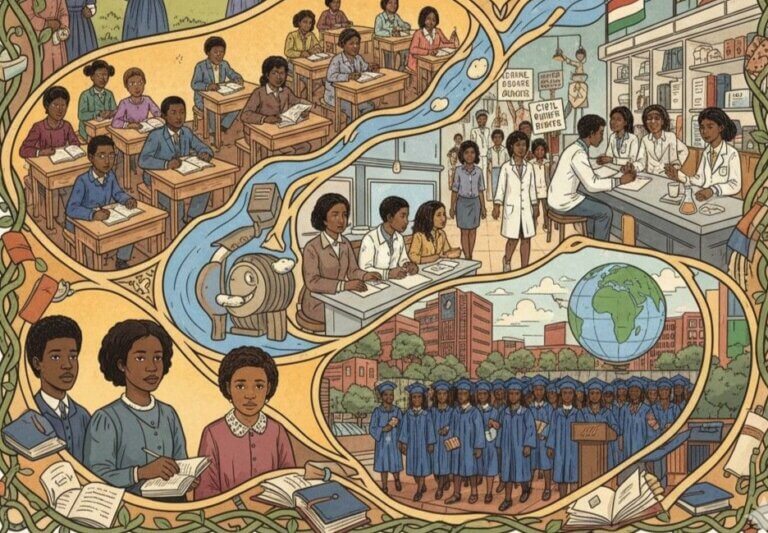
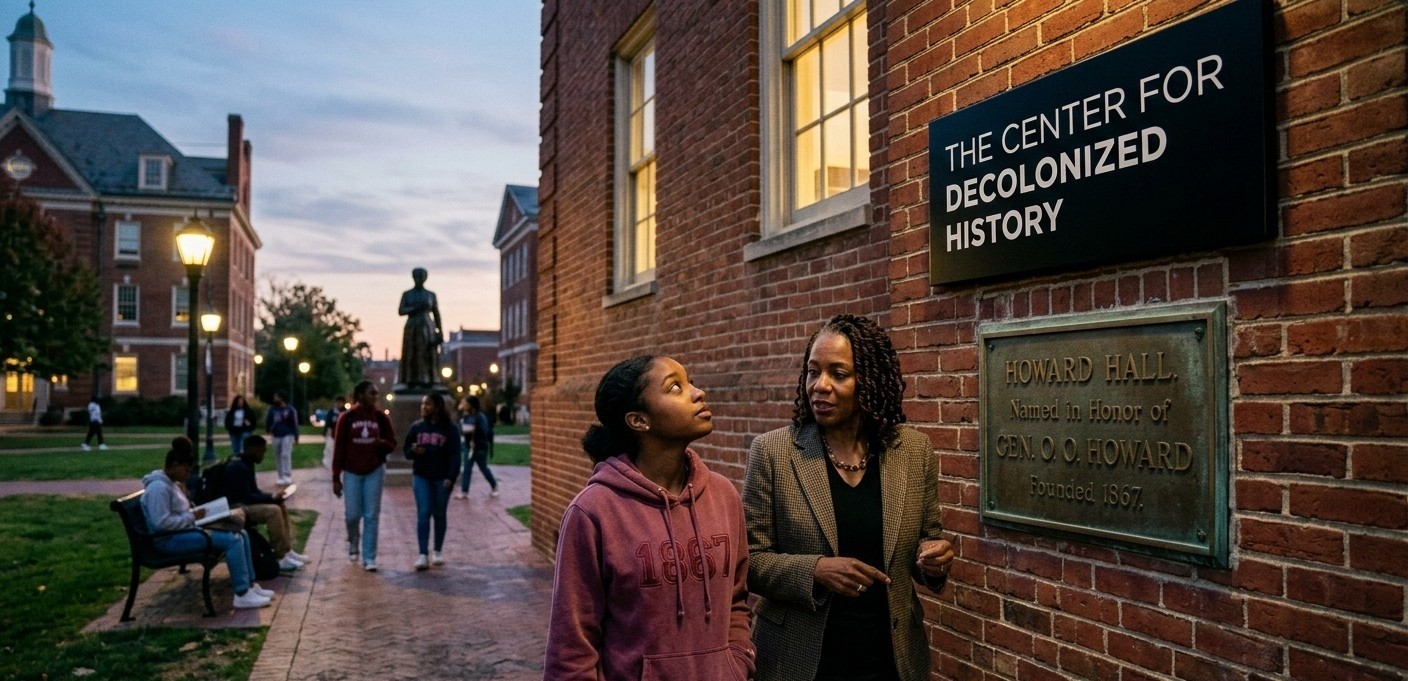
The landscape of American higher education is dotted with names that carry the weight of history. For Historically Black Colleges and Universities (HBCUs), this history is uniquely complex. While these institutions were founded to empower Black Americans in the wake of slavery, many of their names celebrate white generals, missionaries, and philanthropists. This guide explores the origins of these names, the nuances of their legacies, and the modern movement to reconcile the Black excellence of the present with the white nomenclature of the past.
Beyond the names on the buildings, many people often wonder about the current demographics of these campuses and ask, can white students attend HBCUs? Today, these institutions remain open to all while continuing to champion their historic mission.
Which HBCUs are Named After White Figures?
Several prominent Historically Black Colleges and Universities (HBCUs) bear the names of white benefactors, military leaders, and abolitionists. Notable examples include Howard University (Oliver Otis Howard), Hampton University (Samuel Chapman Armstrong), Morehouse College (Henry Lyman Morehouse), Spelman College (Laura Spelman Rockefeller), and Clark Atlanta University (Davis Wasgatt Clark). These names reflect the era of foundational missionary and federal support.
| Institution Name | State | White Namesake | Roles/Background | Original Institutional Name |
| Howard University | DC | Oliver Otis Howard | Union General; Freedmen’s Bureau Commissioner | N/A |
| Hampton University | VA | Samuel Chapman Armstrong | Union General; Missionary; Educator | Hampton Normal and Agricultural Institute |
| Morehouse College | GA | Henry Lyman Morehouse | Secretary, American Baptist Home Mission Society | Augusta Institute |
| Spelman College | GA | Laura Spelman Rockefeller | Philanthropist; Abolitionist Family | Atlanta Baptist Female Seminary |
| Clark Atlanta University | GA | Davis Wasgatt Clark | Bishop, Methodist Episcopal Church | Clark College |
| Claflin University | SC | Lee and William Claflin | Methodist Layman; Governor of Massachusetts | N/A |
| Voorhees University | SC | Ralph Voorhees | Philanthropist and Benefactor | Denmark Industrial School |
| Dillard University | LA | James Hardy Dillard | Educator; Educational Reformer | Merger of New Orleans Univ. & Straight College |
| Stillman College | AL | Charles Allen Stillman | Presbyterian Minister | Tuskegee Institute (Presbyterian) |
| Xavier University of LA | LA | Katharine Drexel | Catholic Nun; Heiress; Philanthropist | N/A |
| Philander Smith College | AR | Philander Smith | Financial Benefactor; Philanthropist | Walden Seminary |
| Johnson C. Smith Univ. | NC | Johnson C. Smith | Namesake through widow’s donation | Biddle Memorial Institute |
| Jackson State University | MS | Andrew Jackson | 7th U.S. President (City Namesake) | Natchez Seminary |
| Livingstone College | NC | David Livingstone | Missionary; Explorer | Zion Wesley Institute |
The Architecture of Nomenclature: Why White Names?
To understand why the premier institutions of Black intellectualism are named after white figures, one must look at the socio-economic reality of the Reconstruction era. In the immediate aftermath of the Civil War, the four million newly emancipated Black Americans faced a country that was largely hostile to their advancement. Education was seen as the primary vehicle for true liberation, but the Black community, systematically stripped of wealth for centuries, lacked the capital to build university infrastructures from scratch.
The naming of these institutions was rarely an act of Black choice; rather, it was a reflection of the power dynamics of 19th-century philanthropy. Funding for HBCUs primarily flowed from three sources: the federal government, Northern white missionary societies, and wealthy white industrialists. In keeping with the traditions of the time, schools were often named in honor of the person who secured the funding, provided the initial land, or championed the cause in the halls of Congress.
The Role of Northern Missionary Societies and the Freedmen’s Bureau
The most significant architectural force behind the naming of HBCUs was the Freedmen’s Bureau and its partnership with Northern religious organizations. The Bureau of Refugees, Freedmen, and Abandoned Lands, headed by General Oliver Otis Howard, was instrumental in establishing schools. Howard University, founded in 1867, was named after the General not necessarily out of a desire for white representation, but as a recognition of his role as a “Christian General” who used his federal position to funnel resources into Black education.
Similarly, organizations like the American Missionary Association (AMA) and the American Baptist Home Mission Society (ABHMS) were the primary engines of HBCU growth. These groups were driven by a philosophy of “Christian egalitarianism,” though often tempered by paternalistic views. Because these societies were led by white clergy and funded by white congregations in the North, the names chosen for the institutions they birthed—such as Morehouse (named after Henry Lyman Morehouse, the white corresponding secretary of the ABHMS)—reflected the leadership of the funding body.
Abolitionists vs. Oppressors: Distinguishing Between Namesakes
In the modern era of decolonization and the removal of Confederate monuments, some have questioned whether HBCUs should rename themselves. However, historians argue that there is a vital distinction to be made between namesakes who were “oppressors” and those who were “abolitionists” or “allies.”
For example, Spelman College is named after Laura Spelman Rockefeller and her parents, Harvey Buel Spelman and Lucy Henry Spelman. The Spelmans were lifelong abolitionists whose home was a stop on the Underground Railroad. When John D. Rockefeller made a massive donation to the Atlanta Baptist Female Seminary, it was renamed in honor of his wife’s family to celebrate their long-standing commitment to the cause of Black freedom. In this context, the name is viewed by many as a tribute to an alliance rather than a mark of colonial dominance.
Hampton University, named after the city but heavily influenced by its founder Samuel Chapman Armstrong, presents a more complex narrative. Armstrong, a white Union general, believed in “industrial education,” a philosophy that some modern critics argue was intended to keep Black Americans in subordinate labor roles. Yet, at the time, his efforts were seen as a radical attempt to provide economic stability to a disenfranchised population.
The nuance lies in the intent. Figures like Henry Lyman Morehouse or Davis Wasgatt Clark (the namesake of Clark University, now Clark Atlanta) were individuals who dedicated their lives to the radical idea—at the time—that Black people deserved high-quality, degree-granting education. While they were products of a paternalistic society, their work directly undermined the white supremacist structures of the Jim Crow South.
Reclaiming Identity: The Movement to Rename HBCU Buildings and Institutions
| Institution | Former Building Name | New Name/Status | Reason for Change | Year |
| Virginia State Univ. | Various (4 buildings) | To honor Black women | Recognition of Black female excellence | 2021 |
| UNC Chapel Hill | Hamilton Hall | Pauli Murray Hall | Namesake was a white supremacist/Murray was a Black alum | 2024 |
| Rhodes College | Palmer Hall | Southwestern Hall | Palmer was a pro-slavery theologian | 2019 |
| James Madison Univ. | Jackson, Ashby, Maury | Temporary Names | Namesakes were Confederate leaders | 2020 |
| Rider University | Van Cleve House | Removed Name | Namesake had ties to slavery | 2021 |
Despite the benevolent intentions of many namesakes, the 21st century has brought a renewed focus on “reclaiming the narrative.” This movement doesn’t always advocate for the total renaming of an entire university, but it often targets specific buildings or symbols on campus that honor figures with problematic ties to slavery or segregation.
At Howard University and other institutions, student activists have pushed for the names of Black pioneers to be elevated over white administrators. The argument is simple: if the purpose of an HBCU is to foster Black identity and pride, the physical environment should reflect the heroes of that community. We have seen a shift where new campus expansions are almost exclusively named after prominent Black alumni or faculty, such as the Chadwick A. Boseman College of Fine Arts at Howard.
The conversation around renaming is also a conversation about financial independence. Historically, the names remained because the funding remained tied to white legacy. As Black alumni giving reaches record highs and Black billionaires like Robert F. Smith and MacKenzie Scott (through her focus on equity) provide “no-strings-attached” funding, HBCUs are finding the agency to define their identities on their own terms, free from the shadow of 19th-century paternalism.
Case Study: The Florida “Charlie Kirk” Bill and Institutional Resilience
The push to decolonize HBCU history has recently collided with a new wave of political legislative pressure. In Florida, discussions surrounding bills often championed by conservative figures like Charlie Kirk and promoted through organizations like Turning Point USA have sought to restrict how race, history, and “DEI” (Diversity, Equity, and Inclusion) are taught in state-funded institutions.
While these bills—such as Florida’s SB 266—are often framed as efforts to “remove indoctrination,” they pose a unique threat to the autonomy of HBCUs. By targeting the study of systemic racism, these legislative moves inadvertently (or intentionally) protect the white-centric historical narratives that many HBCU scholars are trying to re-examine.
For instance, if a Florida HBCU wanted to rename a building or overhaul its curriculum to critically analyze the “white savior” origins of its founding, new state laws could potentially be used to block such changes under the guise of preventing “woke” revisionist history. This creates a paradoxical situation where institutions founded to escape white control are once again being told by white-led legislatures how they can and cannot interpret their own history.
The resilience of the HBCU, however, lies in its ability to adapt. Throughout the 20th century, these schools navigated the dangers of the KKK and the defunding threats of segregationist governors. Today, the “institutional resilience” of HBCUs is manifested in their commitment to truth-telling. Whether the name on the gate is Howard or Morehouse, the education happening inside the classrooms is uncompromisingly focused on the Black experience.
Conclusion: The Path Forward
The names of HBCUs serve as a permanent record of a specific moment in American history—a moment where Black aspiration met white philanthropy and federal intervention. While some view these names as scars of a paternalistic past, others see them as trophies of survival, proving that Black intellect could thrive even within the structures provided by a white-dominated society.
Decolonizing the HBCU is not merely about changing the letters on a sign; it is about the “Architecture of the Mind.” It is about ensuring that the curriculum, the leadership, and the cultural output of these schools belong entirely to the Black community. As these institutions move into a second century of excellence, they do so with a clear understanding of their history—white namesakes and all—while building a future that is undeniably, unapologetically Black.